

Apocalyptic Literature Course
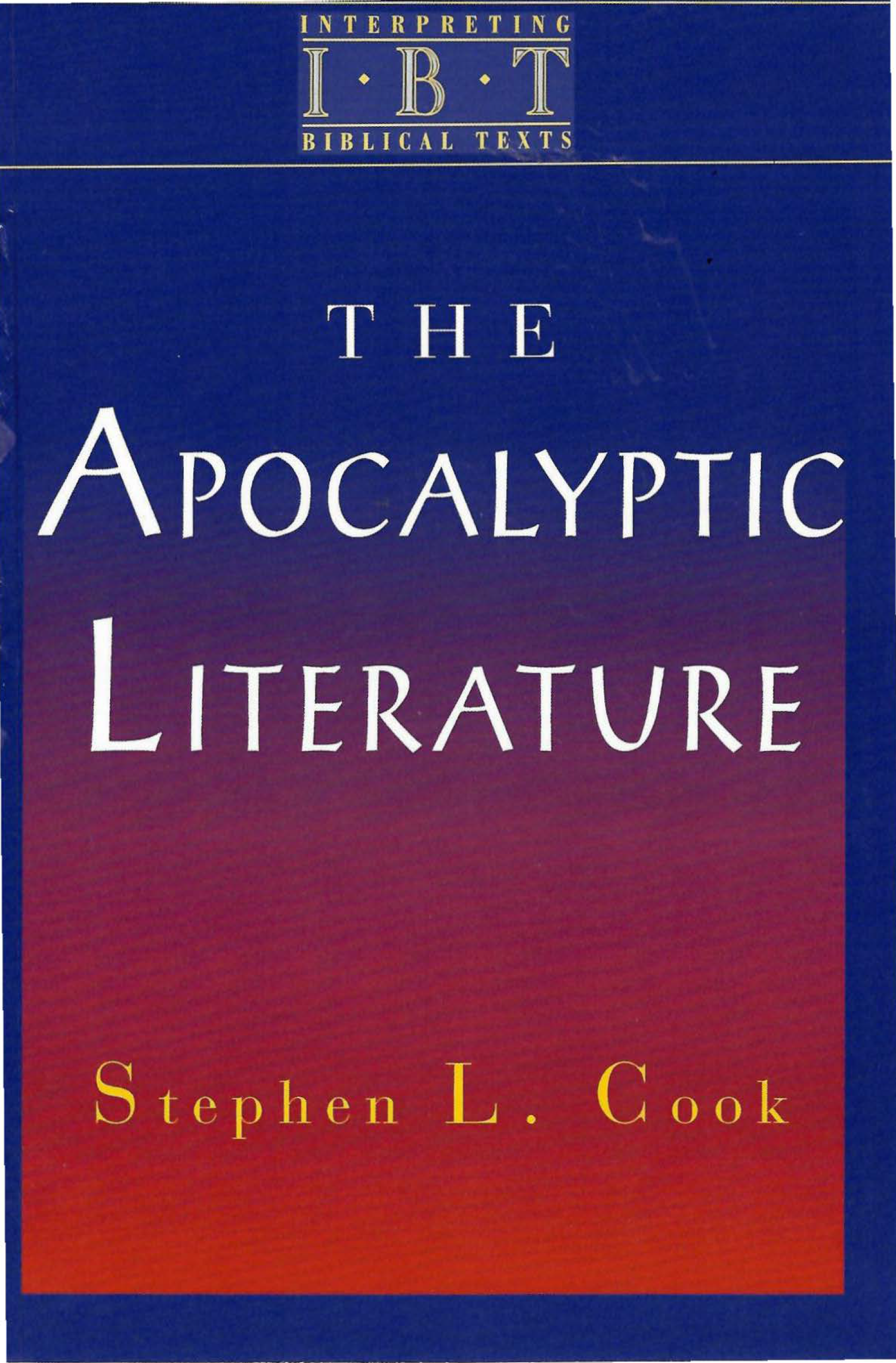
The Apocalyptic Literature by Stephen L. Cook
Stephen L. Cook’s The Apocalyptic Literature offers a thorough study of apocalyptic writings in the Hebrew Bible and Second Temple Judaism. The book addresses the origins, literary forms, and theological themes of apocalyptic literature, with particular emphasis on its historical and social settings. Cook analyzes key texts such as Daniel, Ezekiel, and Revelation, explaining how they convey visions of God’s judgment, cosmic conflict, and ultimate redemption. He also explores how these writings grapple with questions of suffering, hope, and divine sovereignty, making the volume an essential resource for understanding both ancient and modern religious thought as well as God’s unfolding plan of salvation.
About the Author

Stephen L. Cook is Professor of Old Testament at Virginia Theological Seminary and a distinguished biblical scholar. He is widely recognized for his expertise in the Hebrew Bible, particularly in apocalyptic literature, the prophetic books, and the ancient Near Eastern background. Cook earned his doctorate at Yale University and has authored several influential works, including The Apocalyptic Literature and Prophecy and Apocalypticism. His research, grounded in rigorous analysis of the biblical text, is highly esteemed for shedding light on the fulfillment of God’s great purposes, which will assuredly come to pass in the unknown future.
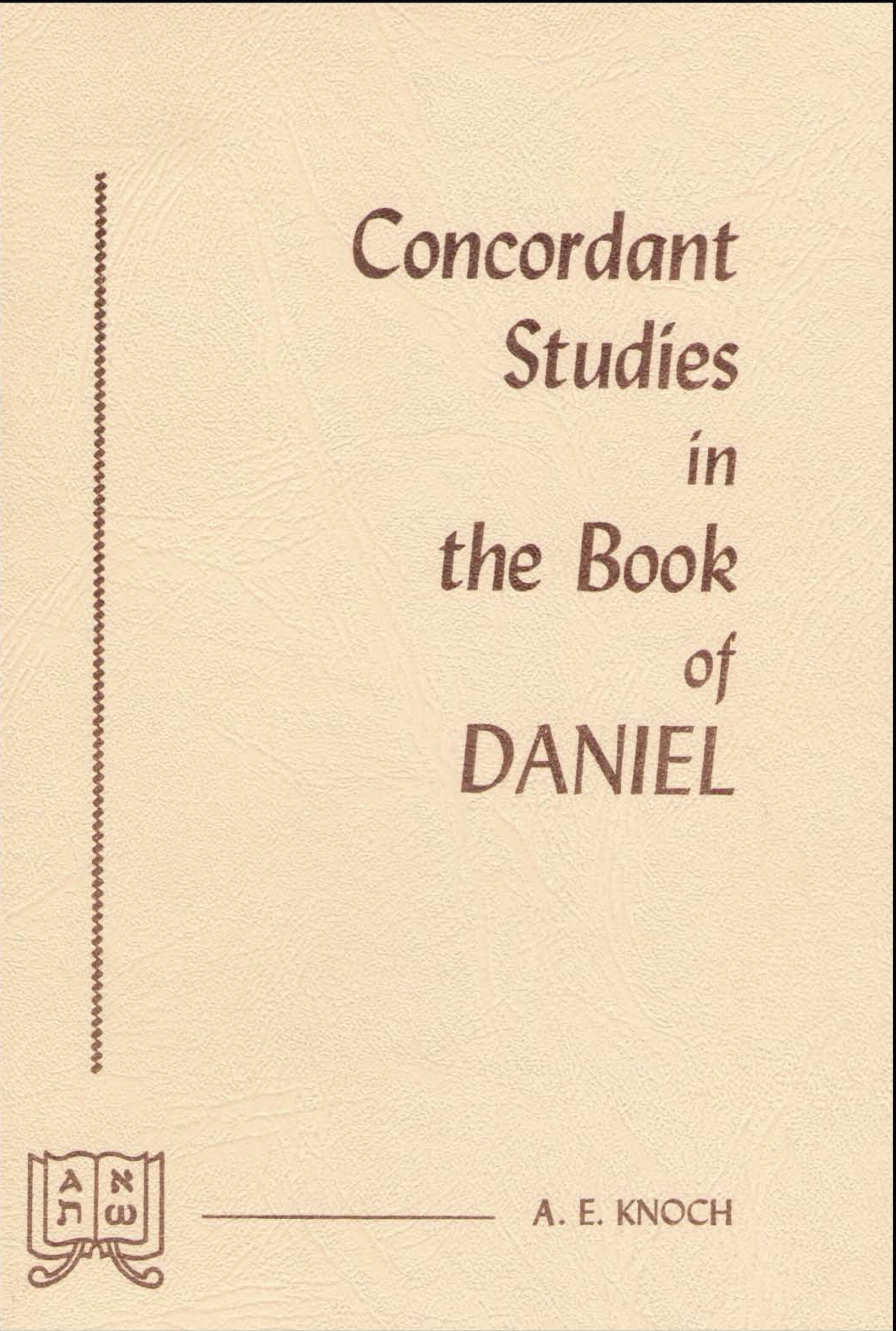
Concordant Studies in the Book of Daniel by A. E. Knoch
A. E. Knoch’s Concordant Studies in the Book of Daniel is an in-depth study of the prophecies in Daniel, grounded in the concordant method of biblical word analysis. Knoch selects consistent English renderings for key Hebrew and Aramaic terms and translates the biblical text with these choices. He then applies the same renderings consistently in his interpretation of the text. Thus, while the reader is engaging with English, they remain firmly within the framework of the original biblical languages, gaining a clear understanding of prophetic visions, historical events, and eschatological themes. Placing strong emphasis on a literal and concordant approach in nearly every case, Knoch highlights Daniel’s message concerning the rise and fall of empires, the prophecy of the seventy weeks, and end-time scenarios. This volume forms part of Knoch’s broader effort to translate the biblical text into English in a systematic and concordant way, and to uncover the meaning embedded within it.
About the Author

A. E. Knoch (1874–1965) was a noted biblical scholar, author, and the founder of the Concordant Publishing Concern. He is best known for his work on Concordant Literal New Testament, a translation that sought to render Greek words consistently and literally throughout the New Testament. Knoch emphasized accuracy and consistency in biblical study, aiming to provide a clearer understanding of Christian doctrine through precise linguistic analysis. His writings, especially Concordant Studies in the Book of Daniel, reflect his scholarly commitment to interpreting Scripture in a detailed and systematic way. In 1905, he launched the periodical Unsearchable Riches, which continues to be published quarterly to this day, serving devout readers who desire a deeper and more exact grasp of the biblical text.
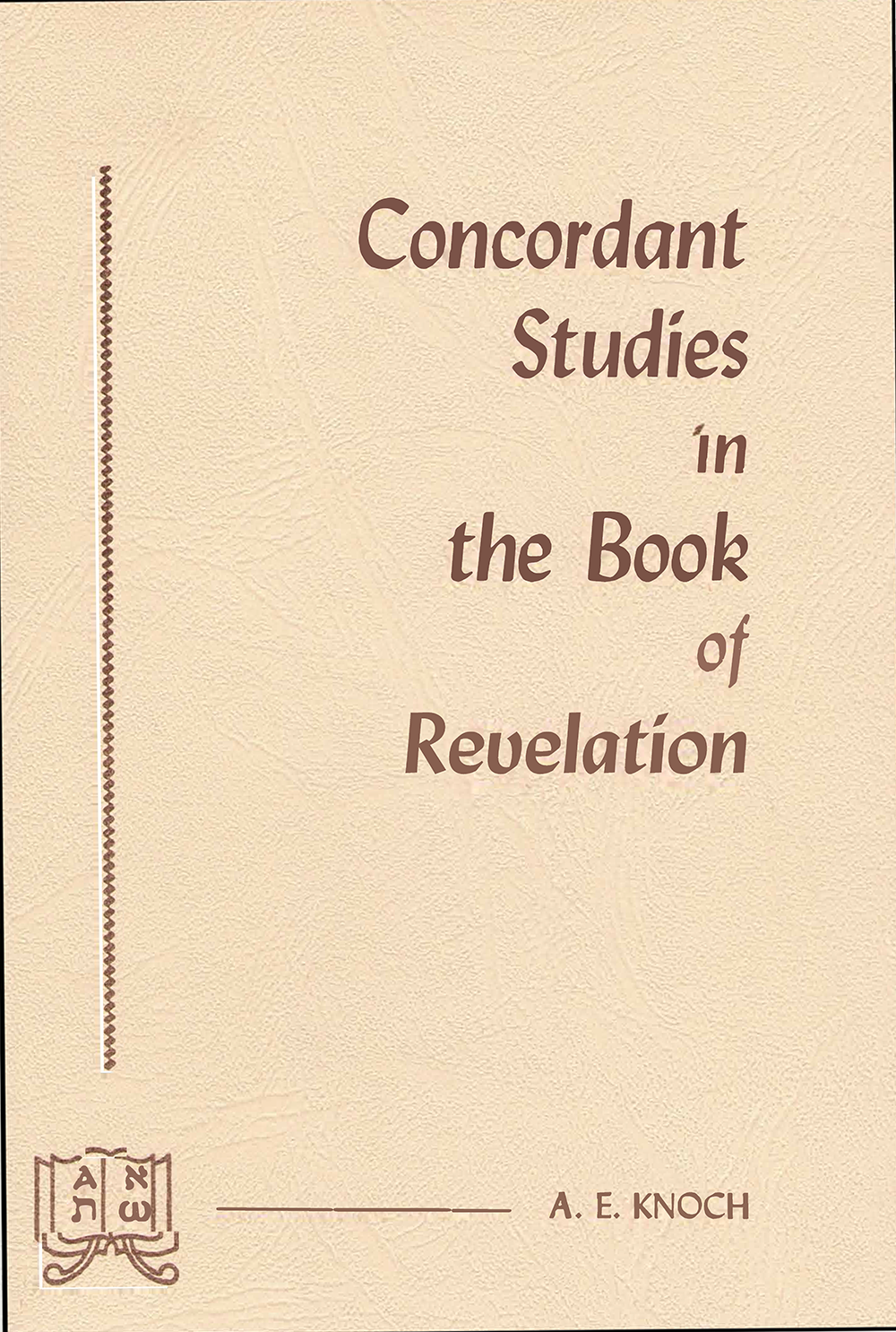
Concordant Studies in the Book of Revelation by A. E. Knoch
A. E. Knoch’s Concordant Studies in the Book of Revelation follows the concordant methodology, aiming first and foremost to render the Greek words of Revelation literally, consistently, and precisely across the entire Scriptures. In seeking to discern the meaning of the Apocalypse, Knoch places particular emphasis on its connections with the Hebrew Scriptures, especially the Book of Daniel. Rather than viewing Revelation too readily as symbolic or allegorical, he presents it as an exact prophecy that reveals God’s administrative plan (oikonomia, Gr.) for Israel, the nations, and the ecclesia. He underscores that throughout the succession of the “eons”—distinct periods of God’s administration—God’s judgments, resurrections, and opportunities for life are progressively extended to all people. At the same time, he critiques traditional Christian interpretations, arguing that they have often been shaped more by theological traditions and presuppositions than by the linguistic consistency of the text, and that such inherited readings continue to be reproduced without sufficient regard for the concordant principle.
About the Author
A. E. Knoch (1874–1965) was a noted biblical scholar, author, and the founder of the Concordant Publishing Concern. He is best known for his work on Concordant Literal New Testament, a translation that sought to render Greek words consistently and literally throughout the New Testament. Knoch emphasized accuracy and consistency in biblical study, aiming to provide a clearer understanding of Christian doctrine through precise linguistic analysis. His writings, especially Concordant Studies in the Book of Daniel, reflect his scholarly commitment to interpreting Scripture in a detailed and systematic way. In 1905, he launched the periodical Unsearchable Riches, which continues to be published quarterly to this day, serving devout readers who desire a deeper and more exact grasp of the biblical text.